Why Convenience Store Energy Efficiency Matters Right Now
In a typical convenience store, energy costs rank as the second- or third-largest operating expense after labor and product. Energy efficiency is critical for convenience stores due to high utility expenditures, and understanding where electricity consumption occurs is the first step toward meaningful savings. Convenience stores are high-energy consumers due to 24/7 operations, walk-in coolers and freezers, heavy lighting demands, and constant foodservice equipment loads.
Refrigeration alone can consume up to 40% of a store’s total energy use, according to the U.S. EPA’s ENERGY STAR program. Lighting and HVAC typically account for most of the remainder. That means the three systems together represent the majority of every month’s electricity bill, making energy efficiency a strategic advantage for convenience store operators looking to protect profitability.
This article breaks down where convenience store energy goes, explains where waste hides in refrigeration, HVAC, and lighting, and covers practical steps to reduce consumption. It also addresses when centralized energy monitoring becomes worth considering for multi-location operators.
Where Convenience Stores Use the Most Energy
The main energy end uses in any convenience store are refrigeration, HVAC, lighting, foodservice equipment, and miscellaneous plug loads. Typical electricity consumption breakdowns show refrigeration accounting for roughly 40% of total energy, HVAC around 15–25%, and lighting approximately 8–15%. The remaining share goes to foodservice units, coffee machines, roller grills, and other plug loads.
What separates a convenience store from similar-size retail is continuous operation. Frequent door openings on walk-in coolers, reach-in glass doors, and open display cases force compressors to cycle constantly. Rooftop HVAC units condition space around the clock. Canopy lighting over gas pumps and illuminated signage run from dusk to dawn-and sometimes beyond. Even newer loads like EV charging stations are beginning to change a building’s energy profile in some locations.
ENERGY STAR certified buildings use 35% less energy on average, which means there is a real benchmark to measure against. Below, we look at the three largest cost drivers in detail.
Refrigeration: The Largest Driver of Convenience Store Energy Use
Refrigeration can use up to 40% of convenience store energy and is often one of the store’s largest energy loads. That makes refrigeration equipment a major target for reducing operational costs.
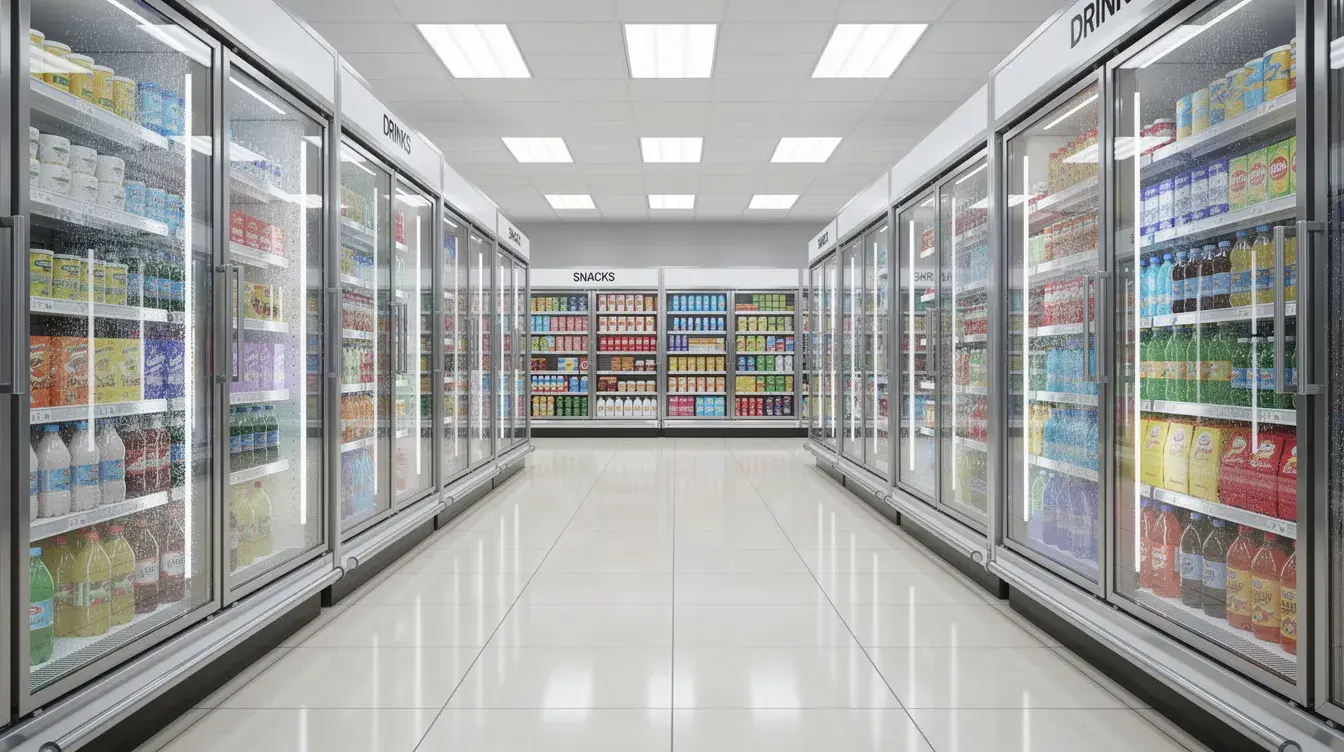
Common refrigeration assets include walk-in coolers, walk-in freezers, glass-door reach-ins, open multi-deck cases, under-counter units, and ice merchandisers. Each one contributes to the total load, but the waste often comes from the same sources: doors left open on walk-ins, failed or drifting thermostats, dirty condenser coils, incorrect temperature settings, and degraded door gaskets that allow warm air to enter and force compressors into extended runtimes.
The challenge is that temperatures must stay within safe ranges-generally 33–41°F for refrigerated foods and 0°F or lower for freezers. Reducing energy use contributes to maintaining product quality in convenience stores, but pushing setpoints too high risks spoilage. Proper maintenance of refrigeration systems helps maintain product temperatures and quality without wasting electricity.
Practical measures include installing auto-closers on walk-in doors, repairing gaskets promptly, cleaning condenser and evaporator coils on schedule, and adding night curtains to open display cases. Modern refrigeration upgrades can significantly decrease operational costs and improve reliability over aging units.
Continuous commercial refrigeration temperature monitoring and runtime visibility help operators spot problems—such as a compressor running all night or repeated high-temperature excursions—before they turn into spoiled inventory or inflated bills. Refrigeration energy savings can significantly cut operational costs when operators act on what the data reveals.
HVAC Scheduling, Comfort, and Equipment Performance
Heating and cooling can represent a large portion of energy costs, with HVAC systems accounting for 15–25% of total annual electricity in many stores. A typical convenience store’s HVAC costs can be substantial monthly, especially in hot or humid climates where cooling loads are relentless.
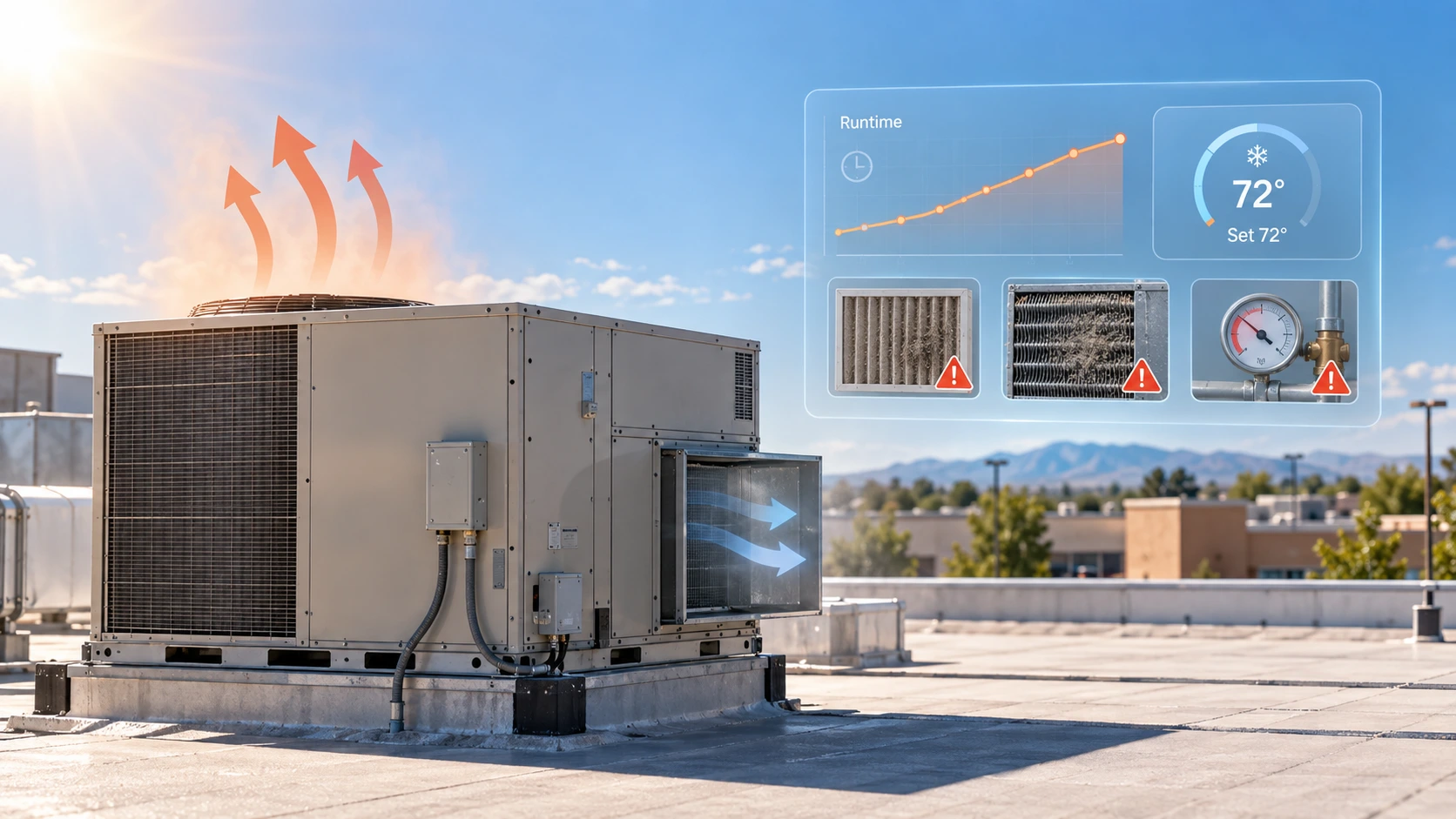
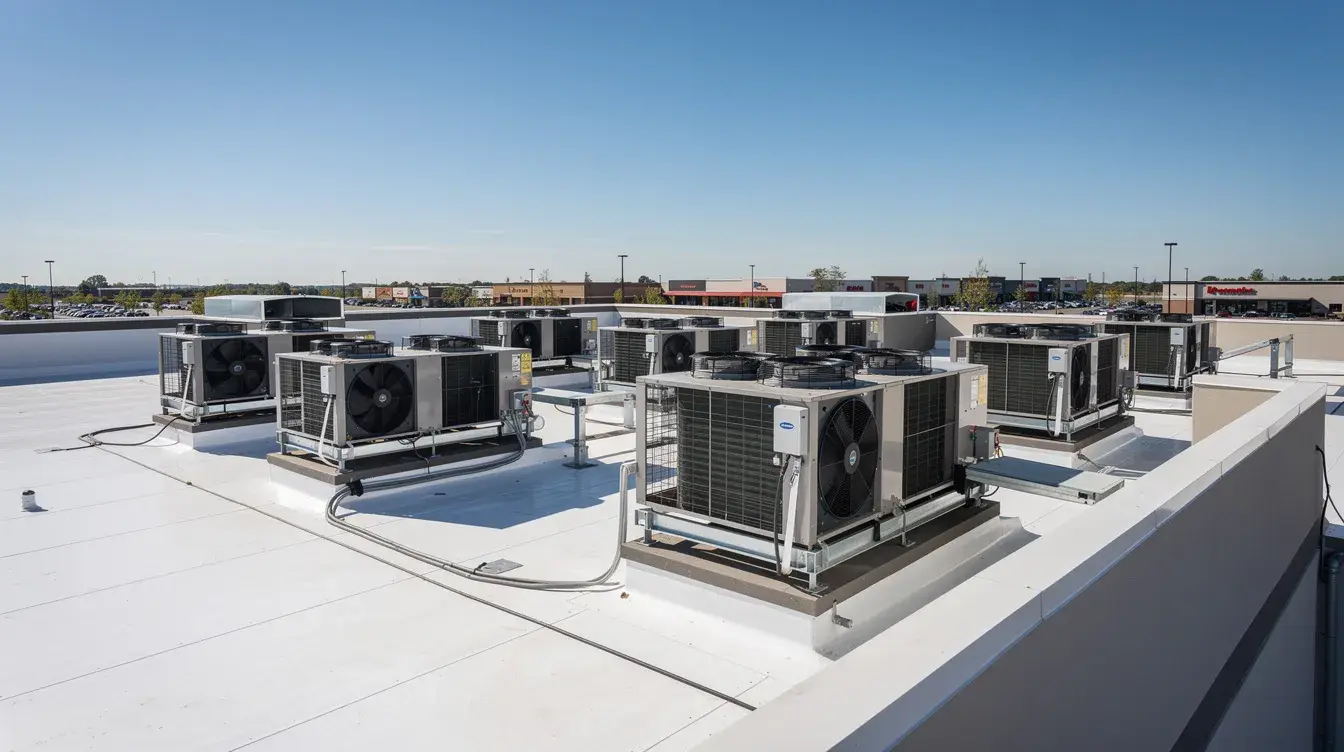
Most convenience stores rely on one to three packaged rooftop units controlled by simple programmable thermostats. Zones often differ between the sales floor, back office, and food prep rooms, but schedules rarely reflect actual occupancy patterns. Systems left in occupied mode 24/7, manual overrides that never get reset, and simultaneously heating and cooling different zones all quietly increase consumption.
Using smart thermostats or automated controls can optimize HVAC efficiency by enforcing occupied versus unoccupied setpoints. For example, adjusting HVAC settings during verified low-traffic periods can lower runtime without compromising customer comfort during busier hours. Efficient building envelopes-proper insulation, sealed ductwork, intact weatherstripping-also help reduce HVAC and refrigeration loads by keeping conditioned air where it belongs.
Preventive maintenance of HVAC and refrigeration equipment reduces unexpected breakdowns. Tracking metrics like runtime hours, temperature performance, and short cycling through centralized commercial HVAC monitoring helps facilities teams identify abnormal HVAC behavior before it drives up the electricity bill for months.
Lighting: Interior, Exterior, Canopy, and Signage Loads
Lighting accounts for 8% of energy use in convenience stores on the low end, and considerably more in stores still running older technology across canopies and lots. The main categories include interior sales-floor fixtures, cooler door light strips, back-of-house lighting, exterior wall packs, parking lot poles, canopy lighting over fuel pumps, and illuminated signage.
Older metal halide or fluorescent canopy fixtures can draw 400 watts each and run dusk to dawn. Replacing them with LEDs at 100–150 watts per fixture cuts wattage dramatically-upgrading to LED lighting can reduce energy use by up to 90% compared to incandescent lighting, with meaningful savings against HID and fluorescent as well. Lighting upgrades can save energy and reduce maintenance costs because LEDs last 50,000 hours or more, cutting truck rolls for lamp replacements.
Installing occupancy sensors or motion sensors can lower lighting costs in low-traffic areas like restrooms, stockrooms, and back rooms where lights often stay on 24 hours unnecessarily. Photo sensors and time schedules ensure canopy lights turn off during daylight. Canopy lights that remain on outside the intended schedule can waste electricity every month until the scheduling problem is identified and corrected.
LED lighting can significantly reduce energy consumption, and utility rebates in many states help offset the upfront cost of conversion, improving payback timelines.
Schedules, Overrides, and Hidden Energy Waste
Many convenience stores have reasonable equipment on paper, but poor scheduling and constant overrides quietly inflate utility bills. A manager temporarily drops the thermostat during a hot weekend and never resets it. Staff prop open walk-in doors during restocking. Coffee brewers, food warmers, and roller grills stay powered overnight when no customers are present.
Equipment left in occupied mode 24/7-HVAC, lighting, signage-creates unnecessary base load even during hours of minimal traffic. Across multiple stores, these patterns can go undetected for months because bills are aggregated and seasonal weather changes mask the drift. Centralized energy monitoring makes it easier to surface anomalies across multiple locations without relying entirely on manual site visits.
Cloud-based energy management systems that log actual on/off status and runtime for HVAC, refrigeration, and lighting give corporate facilities teams the ability to see patterns by store, region, or brand. A cloud-based energy management system for HVAC, lighting, and refrigeration makes it easier to standardize schedules and respond quickly to issues across locations. Remote control capabilities let authorized staff restore standard schedules after temporary local overrides, limiting long-term waste. Tracking energy consumption helps identify unusual usage and measure performance against standards-without waiting for the next utility statement to arrive.
The cost of a forgotten override can quietly increase energy use month after month, with the impact compounding across an entire portfolio.
When an Energy Management System Becomes Worth It
At what point does manual energy management stop working? It becomes increasingly difficult when operators manage multiple locations, maintain 24/7 schedules with heavy refrigeration and HVAC loads, or face repeated food temperature issues. Benchmarking energy use helps identify savings opportunities, but you need consistent data to benchmark against.
A platform like eViewIoT combines data from HVAC, refrigeration, lighting, and temperature sensors into a single custom IoT dashboard accessible via browser or mobile. Core capabilities include HVAC monitoring and control, refrigeration temperature monitoring, lighting scheduling and control, alerts and notifications, equipment runtime visibility, multi-location visibility, historical trends analysis, and remote equipment diagnostics. Remote monitoring reduces operational costs significantly by giving operators the knowledge to act before small problems become expensive ones.
In an actual eViewIoT convenience store energy management system case study, a multi-location operator tested the platform at one store using adaptive refrigeration controls, smart HVAC thermostats, lighting controls, and cloud-based monitoring. Temperature and equipment alerts helped staff respond to refrigeration issues before they became more serious failures, while runtime and energy data gave the management team better visibility into where maintenance attention was needed.
Implementing energy management systems for HVAC, lighting, and refrigeration can improve visibility and control over energy use, but outcomes depend on how operators use the insights. Energy-efficient practices also improve brand reputation and sustainability, which matters increasingly to customers and companies alike. The immediate opportunity is simpler: understand where energy goes, ensure schedules are enforced, and learn from the data each store produces.
Refrigeration, HVAC, and lighting remain the three largest levers. The money saved flows directly to the bottom line. If centralized visibility and control across your stores sounds like the right next step, read more about energy management for convenience stores to see how it works in practice. For operators looking to reduce controllable operating costs without changing what they sell, improving visibility into refrigeration, HVAC, lighting, and equipment runtime creates a practical place to start.