Introduction
If you’re a restaurant owner, operator, or manager, you may have noticed your electricity bill is higher than it was last year—even if your operations haven’t changed much. Understanding why your restaurant electricity bill increases is crucial for controlling costs, protecting your bottom line, and improving operational efficiency. With utility expenses making up a significant portion of restaurant overhead, identifying the root cause of higher bills can help you take targeted action to reduce unnecessary energy waste and avoid surprise costs.
Background: Why Restaurant Electricity Bills Matter
Restaurants are energy-intensive operations with significant utility bills. Electricity costs are driven by several factors:
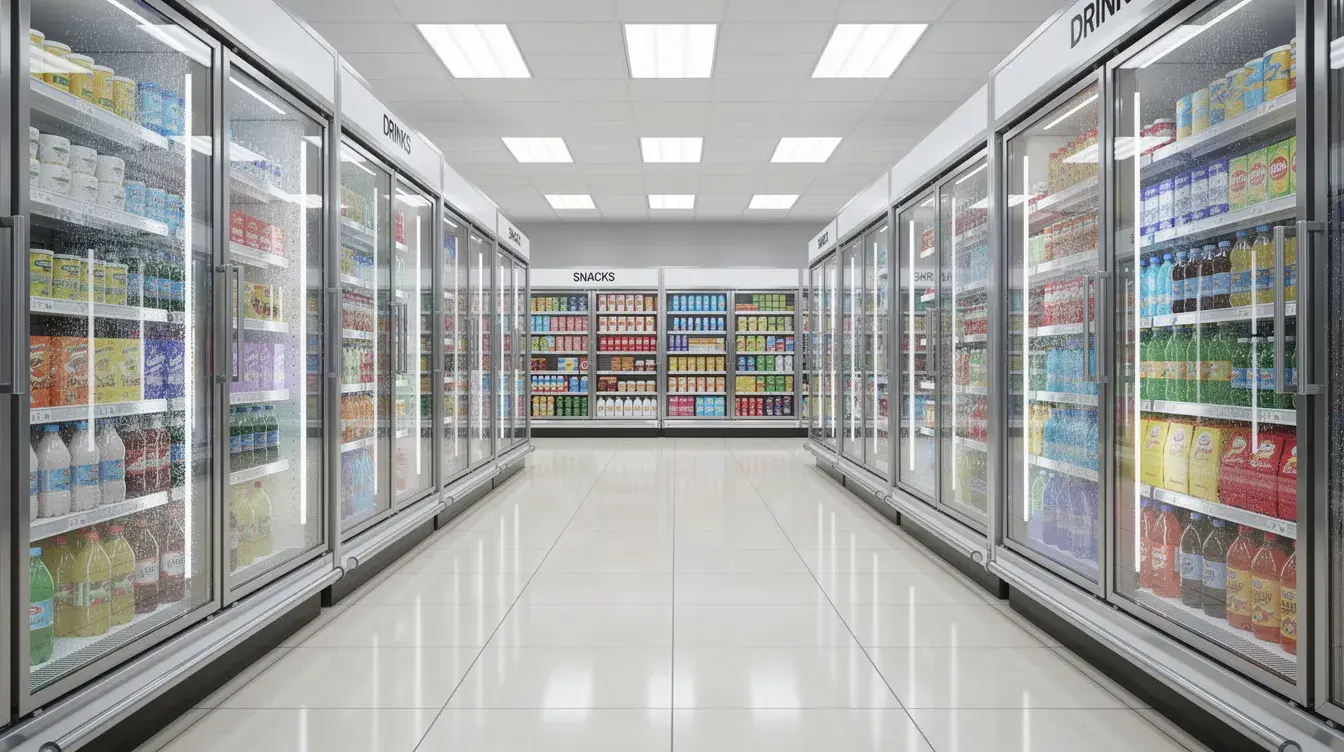
- Equipment use: Commercial kitchens rely on high-demand appliances, including refrigeration, cooking equipment, and point-of-sale systems. Refrigeration alone consumes large amounts of electricity in restaurants.
- Operating hours: Extended hours and high customer volume mean equipment runs longer, increasing total energy use.
- Electricity rates: Changes in utility rates or tariff structures can raise costs even if usage stays the same.
- HVAC systems: Heating, ventilation, and air conditioning can account for a significant share of restaurant energy use, particularly in quick-service restaurants.
- Water heating: Commercial dishwashers and other hot-water systems can also add significantly to total restaurant energy use.
Because of these factors, even small changes in operations or equipment performance can have a big impact on your electricity bill.
Electricity Prices Are Rising: What Restaurant Owners Need to Know
Commercial electricity prices have continued to rise nationwide. For restaurants—already among the most energy-intensive businesses—this makes understanding and managing electricity costs increasingly important. With high energy demands from refrigeration, HVAC, and long operating hours, understanding and managing your electricity bill is more important than ever for maintaining profitability.
How do you figure out why your energy consumption bill went up?
Work through four questions in sequence. Each one is cheap to answer and each eliminates a possibility.
- Did the rate change?
- Was the weather different?
- Did operations change?
- Is equipment running longer than it used to?
Most people skip to step four and start looking for equipment problems, or stop at step one and accept a rate increase as the whole story. The value of the sequence is that it prevents chasing an equipment fault that turns out to be a hot July, and prevents accepting a rate increase that only explains part of the change.
Did your rate change?
How to Check for Rate Changes
Check this first because it takes two minutes and it is common, and rates have been moving. EIA reported the U.S. average commercial electricity price at 14.19 cents per kWh in June 2026, up 4.8% year over year. For January through June 2026, the commercial average was 13.86 cents per kWh, up 6.1% from the same period in 2025.
Comparing Bills
Pull the current bill and the same month from last year. Compare three things: the energy rate per kWh, the demand rate per kW, and any fixed charges. Then compare total kWh consumed.
If consumption is flat and cost is up, the change is entirely a rate matter and there is no equipment problem to find. If consumption is up too, you have a rate increase layered on something else, and you need to separate them before you can size the real problem.
Tariff Changes
Also check whether you were moved to a different rate schedule. Utilities move accounts between tariffs as usage patterns change, and a tariff change can raise a bill with no change in behavior at all.
Weather matters disproportionately for restaurants because of how energy-intensive they already are. EIA’s 2018 Commercial Buildings Energy Consumption Survey found food service buildings use 263 thousand Btu per square foot on average, compared with 70 thousand Btu per square foot for the average commercial building, making them nearly four times as energy intensive despite averaging only 4,800 square feet, a pattern echoed across many energy management insights for commercial facilities.
Was the weather different?
Why Weather Matters
Weather is the largest legitimate driver of year over year variance in most climates, and it is easy to underestimate. For many owners, the restaurant electricity bill is a major part of restaurant electricity costs and overall energy costs, especially when utility pressure from food costs is already squeezing margins.
Understanding Degree Days
The right comparison is not average temperature. It is degree days, which measure how far and how long temperatures sat above or below a comfort baseline. A summer that averaged two degrees warmer can produce substantially more cooling degree days, and HVAC run time follows degree days closely.
That can have a significant impact on energy usage because HVAC systems work longer to keep the kitchen and dining room comfortable. Most utilities publish degree day data, and NOAA data is publicly available.
Weather, Tariffs, and Restaurant Types
Restaurant electricity costs can also vary significantly by tariff, supplier structure, and operating profile, so the same rate change does not affect every average restaurant equally. Fixed rate plans can improve cost predictability for some operators, while local utility structures differ by market, and proactive commercial HVAC monitoring and control can further limit how those rate changes translate into higher bills.
If cooling degree days rose 15% and your consumption rose 12%, the weather explains it and nothing is wrong. Electricity use is often benchmarked annually by square foot, usually in kWh per square foot, but that metric differs across fast food restaurants, full service restaurants, coffee shops, and other food service businesses.
Long operating hours, natural gas versus electric cooking, and specialized equipment all change total consumption. Kitchen equipment, cooling equipment, water heating, and POS systems all add to total energy demand. Ventilation needs and other cooking equipment also shape electricity use, and dining areas add load in different ways across formats. Fast food locations often use more electricity per square foot because of high-demand equipment and cooking methods, while other formats differ.
Did your restaurant operations or cooking equipment change?
Common Operational Changes
Easy to overlook because these changes happen gradually and nobody logs them against energy usage. Examples include:
- Extended hours, added days, or a new daypart
- Higher volume, which cycles cooking and refrigeration equipment more
- New equipment added, especially refrigeration or a beverage program
- A remodel that changed layout, seating, or hood configuration
- A patio, drive-thru, or exterior lighting addition
- Staffing changes affecting who sets thermostats and when
A new merchandiser cooler and a second beverage unit added last spring will show up in this year’s bill as an unexplained increase, unless someone connects the two and focuses on energy efficiency in the commercial kitchen to offset the added load.
Is equipment running longer than it used to?
Why Equipment Degradation Matters
This is the cause you cannot see on a bill, and it is the one worth finding, because operations affect usage differently in fast food restaurants, full service restaurants, coffee shops, and other food service concepts.
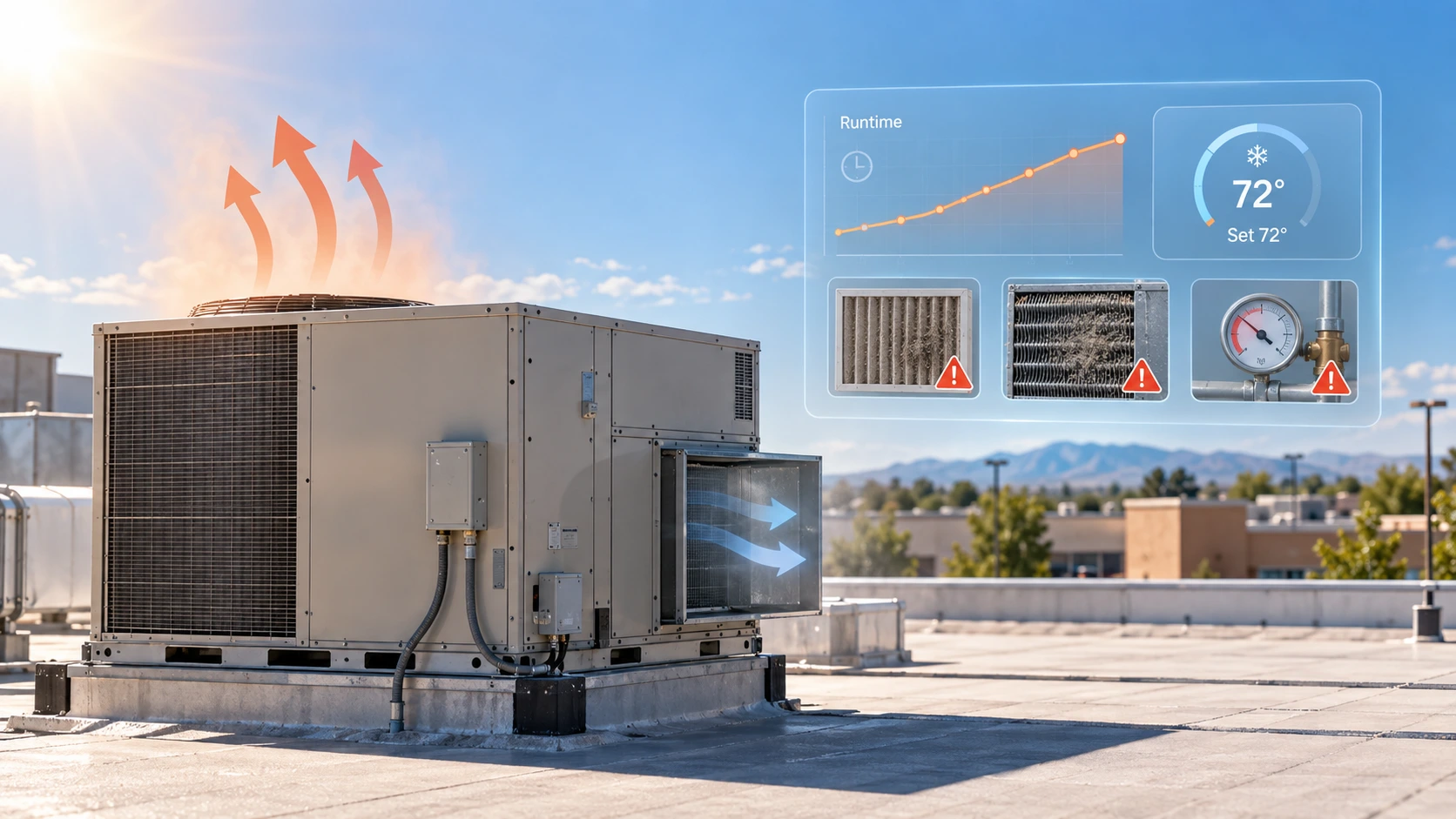
Equipment degrades gradually. A rooftop unit with a fouled condenser and drifting refrigerant charge runs longer to deliver the same cooling. In many kitchens, HVAC, refrigeration, and water heating make up a large share of the restaurant’s total energy, and older units can draw significant energy before anyone notices.
Common Equipment Issues
A walk-in with a failing door seal runs longer to hold the same temperature. That is why walk in coolers deserve close attention: size, age, and temperature settings all affect how much power they use, and poor cooler maintenance adds unnecessary run time. Regular walk in cooler maintenance, including coils, gaskets, and ice buildup checks, supports energy efficiency and helps equipment use less energy.
When replacement is necessary, energy efficient appliances, ENERGY STAR options, and other high efficiency models can provide energy savings and cost savings over time, although the upfront cost and long term savings depend on the equipment and operating conditions, and dedicated commercial refrigeration temperature monitoring helps protect that investment and avoid waste from poorly performing units.
Detecting Equipment Problems
Neither produces a complaint, a fault code, or a temperature excursion. They produce more run hours, which become more kilowatt-hours, which become a bigger bill.
The evidence is not in the bill. It is in run time per unit, compared against the same period last year at similar conditions, especially for specialized equipment and other high demand equipment. Long operating hours or busier peak hours also increase load from kitchen equipment and cooling equipment, which is why many operators turn to an energy management system for restaurants and retail to see and control that behavior in real time.
Without that data, this cause is effectively undiagnosable, which is why it gets absorbed as “costs went up” year after year. Training employees on energy-efficient practices and monitoring energy usage can help restaurant owners identify avoidable waste and save costs. Changes in cooking methods or the service model can also shift usage even when sales look similar.
How do you tell a demand charges increase from a usage increase?
Look at the two line items separately, since they behave completely differently.
| Symptom | Likely cause |
| kWh up, kW peak flat | More total run time. Weather, hours, volume, or degradation. |
| kWh flat, kW peak up | A timing change. Equipment starting together, a new load, a schedule shift. |
| Both up | Usually weather or added equipment. |
| Both flat, cost up | A rate change or a tariff reassignment. |
A demand increase with flat consumption is worth chasing specifically, because it is usually fixable at no operational cost if staff stagger equipment startup during opening routines. Nothing needs to use less. Things need to start at different times, especially outside peak hours when possible.
What does normal year over year variance look like?
There is no universal number, and any figure quoted without reference to climate, rate structure, or total energy consumption is not useful. What is useful is establishing your own baseline.
Compare the same month across three years rather than two. Two data points show a change. Three show whether it is a trend or a fluctuation. If August has climbed each year while your degree days have not, that pattern is equipment, and older or poorly maintained appliances draw significantly more power, so small performance losses can quietly raise energy usage over time.
Also compare across your own sites. If every location rose 8% and one rose 22%, the 8% is environmental and the 22% has a specific cause at a specific location.
How do you find the answer instead of guessing?
The first three causes are answerable from documents you already have: bills, degree day data, and your own operational records. The fourth requires equipment-level operating data, which most operators do not collect.
eViewIoT installs smart thermostats, walk-in refrigeration controllers, wireless temperature sensors, and a site gateway at each location, reporting run time and operating behavior continuously to one cloud dashboard as a complete restaurant energy management system. That produces the comparison the bill cannot: is this unit running longer than it did last year at similar conditions? That matters because refrigeration consumes a large share of restaurant electricity, and walk-in cooler maintenance matters, including cleaning condenser coils, checking door seals, and verifying temperature settings.
eViewIoT records equipment behavior, runtime, temperature trends, and alert history over time, helping operators identify units that are running longer or behaving differently than expected, similar to the results shown in its energy management case studies. Regular cleaning of condenser coils can help maintain equipment efficiency and reduce unnecessary runtime. Site-to-site comparison shows whether an increase is portfolio-wide or specific to one location, which is usually the fastest way to separate weather from equipment and is a core capability of a modern restaurant energy management platform. In kitchens, high demand equipment and ventilation systems can also raise energy demand if schedules drift or controls fail. Separate from eViewIoT’s documented platform capabilities, strategies such as demand controlled kitchen ventilation or broader demand controlled ventilation can also reduce unnecessary airflow and electricity costs where appropriate.
Lower the bill
A bill that goes up without explanation almost always has one. Three of the four possible causes are sitting in documents you already have. The fourth, equipment quietly running longer, is invisible on any bill and is the one that compounds every month until someone measures run time instead of dollars.
That is why the electricity bill is one of the most useful operating signals in a restaurant: it reflects timing, load, and maintenance issues across kitchen equipment and HVAC, not just utility rates. Upgrades to energy-efficient appliances or high-efficiency models often have an upfront cost, but they can reduce restaurant electricity costs with meaningful long-term savings, especially when paired with a convenience store energy management system or similar platform in mixed retail footprints. Replacing old appliances with efficient models can reduce energy costs over time while systems like a dedicated convenience store energy management platform help keep those assets running efficiently. For example, ENERGY STAR currently estimates that certified commercial dishwashers save approximately 2,400 kWh annually compared with standard models, while also reducing water use.
FAQ
Why is my restaurant’s electric bill higher than last year?
The four common causes are a utility rate increase, weather driving more HVAC run time, a change in operating hours or volume, and equipment degrading so it runs longer for the same result. Check them in that order.
Have electricity prices increased recently?
Yes. U.S. commercial electricity prices were 4.8% higher in June 2026 than in June 2025, according to EIA, making it important for restaurant owners and managers to monitor both their electricity rates and energy usage.
Are restaurants energy-intensive businesses?
Absolutely. Restaurants are among the most energy-intensive commercial operations, with significant utility bills driven by equipment use, long operating hours, and fluctuating electricity rates. Refrigeration, HVAC, and water heating are major contributors to total energy consumption.
How do you tell if a higher bill is a rate increase or higher usage?
Compare total kWh consumed against the same period last year alongside the rate per kWh. Flat consumption with higher cost indicates a rate change. Higher consumption indicates something operational or mechanical.
What are cooling degree days and why do they matter?
Cooling degree days measure how far and how long outdoor temperatures exceeded a baseline. HVAC run time tracks closely with them, making them the correct way to compare energy use between years rather than average temperature.
What are demand charges?
Demand charges are based on peak power draw rather than total consumption. Depending on the utility tariff, a short interval such as 15 minutes can affect the monthly demand charge. Staggering equipment startup can help reduce peak demand where multiple large loads would otherwise start together.
Why did my demand charge go up when my usage stayed the same?
Demand charges bill your highest interval power draw rather than total consumption. A higher peak from equipment starting simultaneously can raise the charge even when total kilowatt-hours are unchanged. Staggering equipment startup can help reduce peak demand where the rate structure includes demand charges.
How do you know if equipment or lack of energy efficient appliances is causing a higher bill?
Compare run time per unit against the same period in prior years at similar outdoor conditions. A single 15-minute peak can set monthly demand charges, so utility bills alone may miss that equipment has degraded and is running longer for the same result, which is clearer in run-time data for HVAC systems or through walk in cooler maintenance checks. Staggering equipment startup can help reduce peak demand when several high-demand loads would otherwise start at the same time.