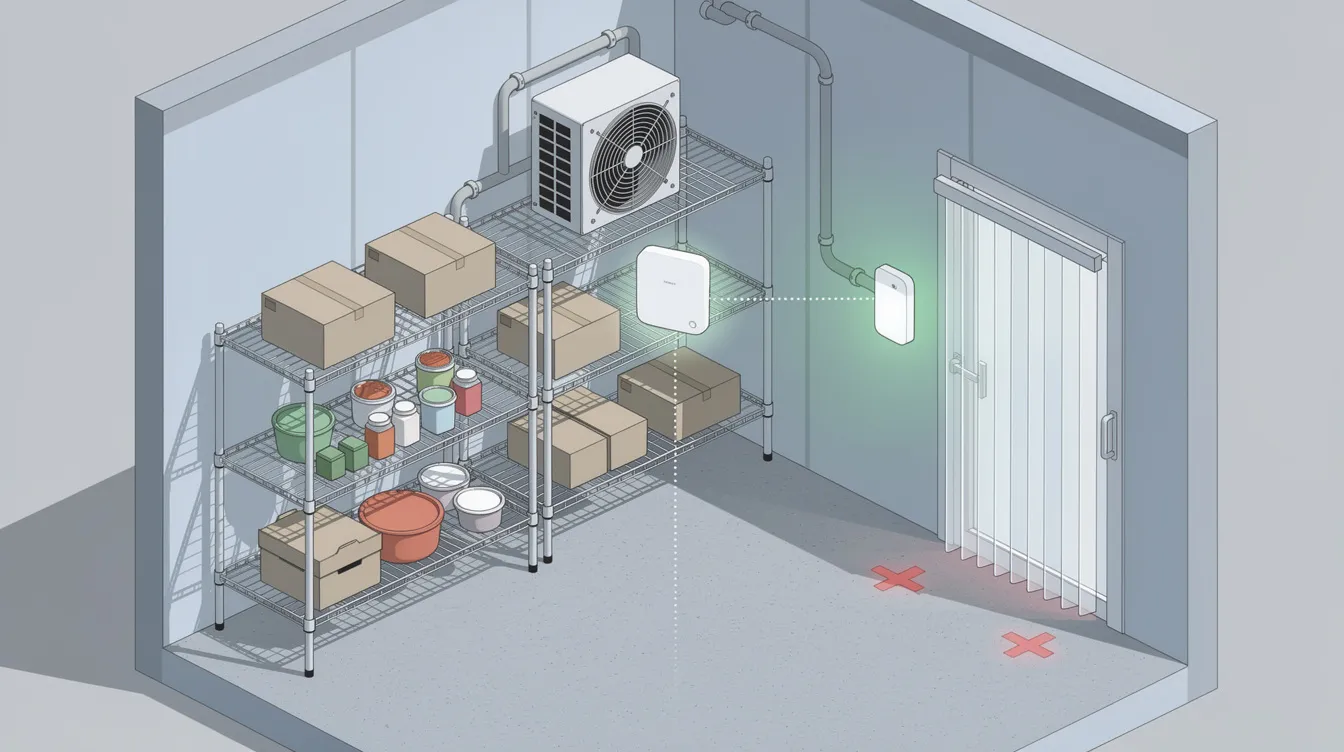
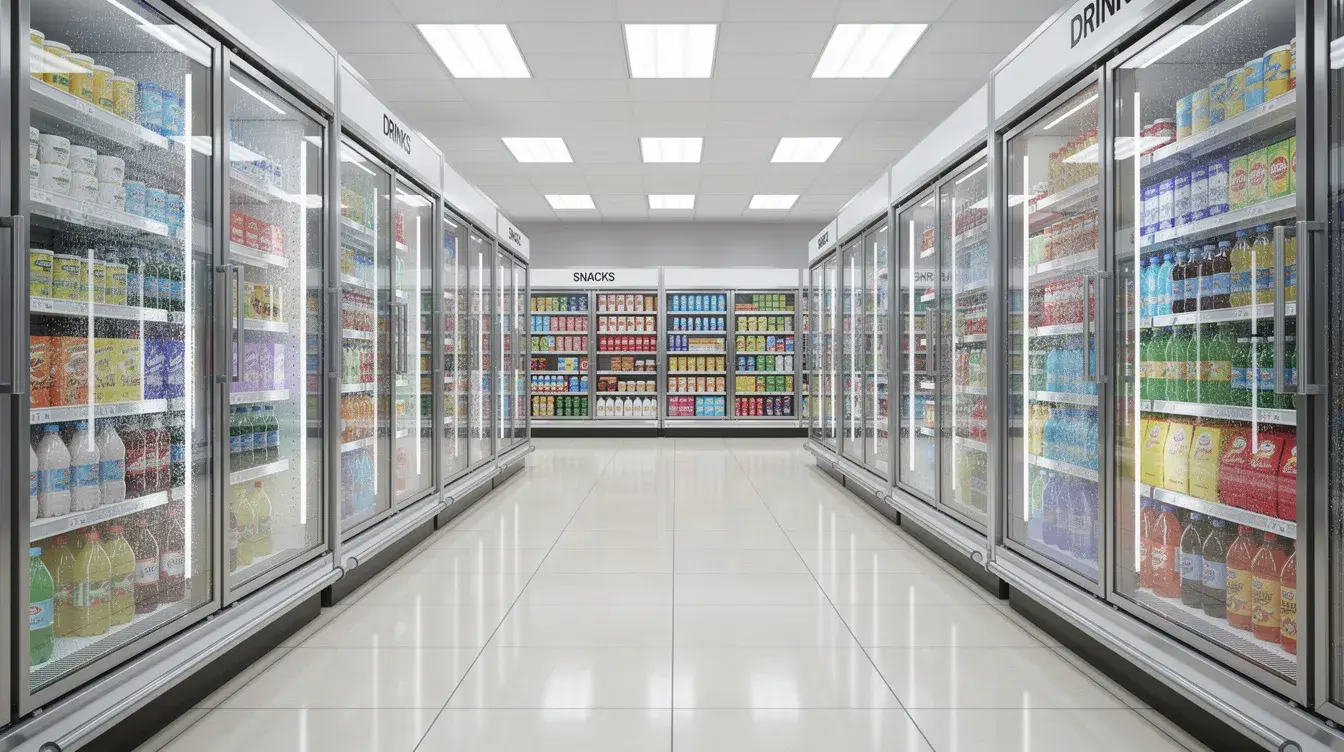
A building management system (BMS) controls a building’s mechanical and electrical systems from one central platform, while an energy management system (EMS) focuses on monitoring and reducing energy use. For most restaurants and convenience stores, a full BMS is more system than the site needs. A cloud-based EMS that controls HVAC, refrigeration and lighting usually covers the equipment that drives energy costs, without the complexity of traditional building automation.
This guide is for restaurant and convenience store operators deciding whether a BMS or an EMS is the right choice for their business. It explains the key differences in BMS vs EMS, when each of the two systems makes sense, and how to choose the right fit for single stores and multi-location operators.
What Does BMS Stand for in HVAC?
In HVAC, BMS stands for building management system. A building management system (BMS) is a centralized control system that monitors and operates a building’s mechanical and electrical equipment, such as heating, ventilation and air conditioning, lighting and, in many buildings, fire and security systems. The terms BMS and building automation system (BAS) are often used interchangeably.
Core BMS Functions
A BMS is built for real-time operational control. Common BMS functions include:
- Running equipment according to programmed sequences, schedules and rule-based logic
- Keeping occupant comfort within set ranges, often using inputs such as occupancy sensors
- Supporting occupant safety by connecting systems such as fire alarms in larger buildings
- Giving facilities managers one interface to see building systems and reduce manual intervention
Note: in battery energy storage, “BMS” means battery management system, a different technology that protects battery cells inside an energy storage system. This article is about building systems, not batteries.
What Is an Energy Management System (EMS)?
An energy management system (EMS) is a platform that monitors, analyzes and controls energy use across a building or a portfolio of sites. Where a BMS focuses on running building functions, an EMS focuses on energy usage and energy performance: which equipment is running, for how long, at what temperature, how much energy it uses, and where energy waste is happening.
EMS platforms for restaurants and convenience stores combine controllers, sensors and cloud software. They follow schedules and setpoints, record runtime and temperature data, and send alerts when equipment moves outside normal ranges, so teams can act sooner on equipment problems and make informed decisions about energy efficiency.
eViewIoT’s energy management systems focus on the three systems that drive most energy use in these businesses: HVAC, refrigeration and lighting.
BMS vs EMS: Key Differences at a Glance
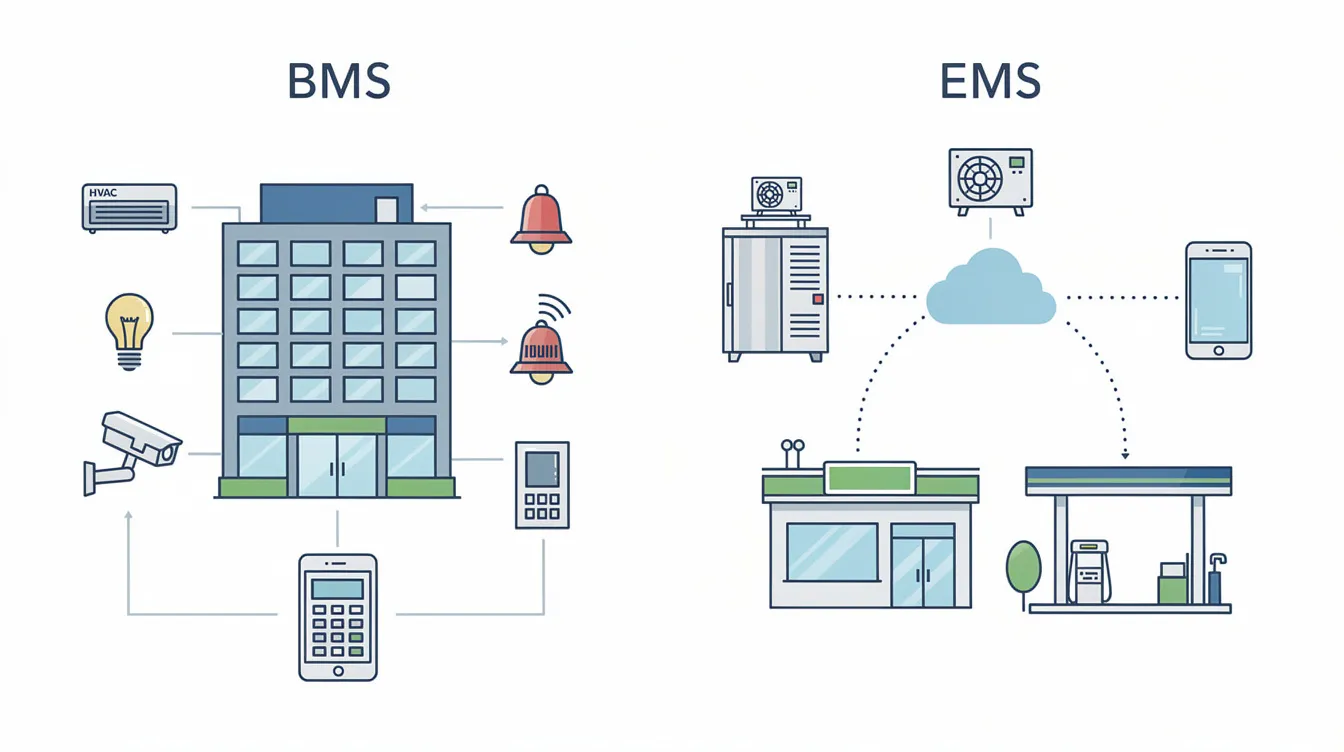
The main difference in EMS vs BMS is scope: a BMS controls the whole building, while an EMS targets energy consumption and the equipment behind it.
| Building management system (BMS) | Energy management system (EMS) | |
|---|---|---|
| Main purpose | Operational control of building systems | Monitoring and reducing energy use |
| Typical systems | HVAC, ventilation, lighting, often fire and security | HVAC, refrigeration, lighting |
| Typical buildings | Large facilities such as hospitals, offices and campuses | Restaurants, c-stores, retail, small commercial sites |
| Data focus | Real-time operating status | Real-time data plus energy, runtime and temperature trends |
| Setup | Usually custom system design and programming for each building | Controllers and sensors connected to the cloud |
| Who runs it | On-site engineers or a controls contractor | Owners, store managers and facilities managers through a browser or app |
| Multi-site view | Often one building at a time | Compare locations from one dashboard |
How EMS and BMS Work Together
Because the two systems serve different functions, many organizations use both: the BMS manages building functions and the EMS adds energy insight, which supports operational efficiency and lower utility costs. In larger modern facilities, the BMS acts as the control layer and the EMS turns energy data into an operating strategy.
For smaller sites, the question in BMS vs EMS is usually whether a full BMS is needed at all.
Why Most Restaurants and C-Stores Don’t Need a Full BMS
Traditional building automation was designed for large buildings with complex systems and on-site engineering teams. Restaurants and convenience stores have a different profile: a smaller footprint, a few rooftop units, walk-in coolers and freezers, reach-ins and lighting, often spread across many locations with no engineer on site.
That gap is why eViewIoT exists. Its story began in 2014 with a large quick-service restaurant chain. Traditional building automation systems were too expensive, hard to use and not adaptable to the smaller footprint of restaurants and c-stores. eViewIoT is a cloud-based, integrated hardware-and-software solution offered as a subscription, and it is the result of more than a decade of helping businesses shrink their energy footprint.
For these businesses, the equipment that matters is clear:
- Refrigeration: walk-in coolers, freezers and reach-ins run 24/7. According to ENERGY STAR, refrigeration may use up to 40% of a convenience store’s total energy.
- HVAC: door traffic, long hours and kitchen heat keep rooftop units working.
- Lighting: dining areas, kitchens, signage and exterior lights that stay on longer than needed.
An EMS that controls these three systems addresses the main sources of energy costs without paying for building functions a small site doesn’t use.
What a Small-Footprint EMS Should Control
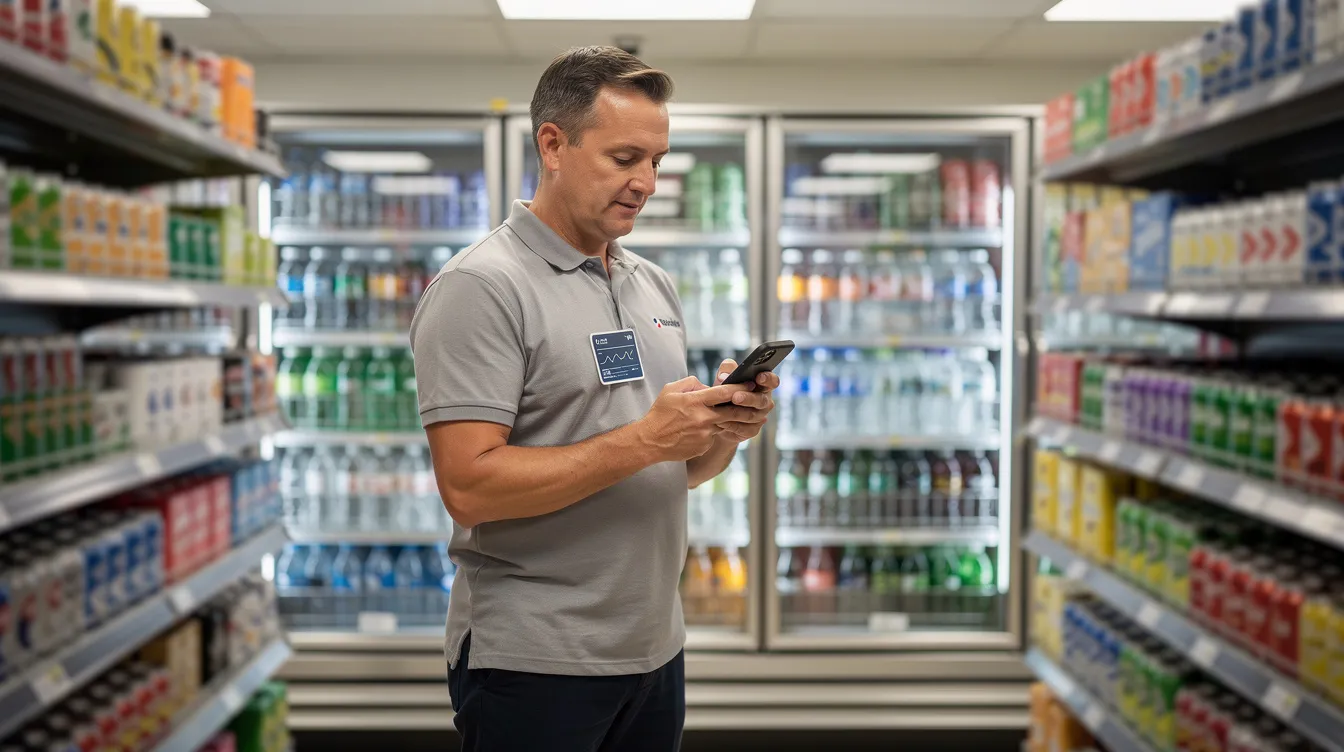
An effective energy management system for restaurants and convenience stores should cover HVAC, refrigeration and lighting in a single platform, plus the data that helps you act on them. Its core controls and capabilities include:
- HVAC control and monitoring
- Refrigeration and temperature monitoring
- Lighting schedules
- Diagnostics and multi-location visibility
HVAC Control and Monitoring
- Look for scheduled control, managed setpoints and runtime visibility.
- With eViewIoT, operators can set HVAC schedules and keep managed setpoints in place, and on supported thermostats temporary setpoint overrides can automatically return to the permanent setpoint.
- Fan, compressor and stage runtime show when a unit works longer than expected.
- Learn more about commercial HVAC monitoring.
Refrigeration and Temperature Monitoring
- Wireless sensors track walk-in coolers, freezers, reach-ins and prep tables and send data to the cloud.
- Alerts go out by text, email, mobile app or dashboard when temperatures move out of range.
- Adaptive refrigeration control reduces unnecessary defrost cycles by up to 70%.
- See how refrigeration temperature monitoring protects inventory.
Lighting Schedules
Lighting controls keep dining areas, kitchens, signage and exterior lighting aligned with operating schedules and exterior conditions, so lights run based on store needs instead of running unnecessarily.
Diagnostics and Multi-Location Visibility
- Runtime and temperature trends flag units running longer than normal and help detect issues such as a dirty filter, a door left open or ice buildup, which helps track system performance over time.
- Multi-location operators can compare runtime, energy and temperatures across sites from one dashboard and receive location-based alarms.
- Where energy metering is installed, the platform also shows energy data for monitored equipment.
Cost Reduction: What Results Can an EMS Deliver?
Combining refrigeration, HVAC and astronomical lighting schedules can deliver 10–30% energy savings, and in-field reports confirm up to a 20% reduction in overall maintenance expenses. Results vary by site, equipment condition, climate and schedules.
Case studies show what this looks like in practice:
- National burger chain: 24% average energy savings across three locations. Read the National Burger case study.
- Convenience store: a Midwest convenience store reduced energy consumption by 13,147 kWh (5.5%) from March to September, or 37,422 kWh (13.4%) when normalized. Read the convenience store case study.
These results are specific to each case and are not a guarantee for other sites.
Smart Thermostat vs EMS vs BMS
A smart thermostat controls one HVAC unit or zone. An EMS controls HVAC, refrigeration and lighting across one store or a whole portfolio. A BMS controls the full set of integrated systems in a larger facility.
| Option | Controls | Best fit |
|---|---|---|
| Smart thermostat | One HVAC unit or zone | A single small space with one HVAC need |
| EMS | HVAC, refrigeration and lighting, plus alerts and data | Restaurants, c-stores and retail, one site or many |
| BMS | Full building systems | Large facilities with complex systems and on-site staff |
If you are comparing thermostats, see what to look for in a restaurant thermostat.
BMS vs EMS: 5 Questions to Help You Choose
- Which systems drive your energy costs? If they are HVAC, refrigeration and lighting, an EMS covers them.
- Who will manage the system? Without an on-site engineer, choose a platform facilities managers and store managers can use from a browser or mobile app.
- How many locations do you run? For multi-location operators, comparing sites from one dashboard matters more than deep control of one building.
- What alerts do you need? Refrigeration temperature alerts protect product; runtime alerts catch HVAC problems early.
- How do you want to pay? eViewIoT is offered as a subscription with no up-front capital or installation services required.
For a business-specific view, see energy management for restaurants and convenience stores.
Frequently Asked Questions
What is the purpose of a BMS?
A building management system centralizes control of a building’s mechanical and electrical systems, such as HVAC, ventilation and lighting, so they run on schedule and keep occupants comfortable.
Is a BMS the same as an EMS?
No. In BMS vs EMS, a BMS focuses on operational control of building systems, while an EMS focuses on energy consumption, equipment performance and reducing energy waste. Some platforms overlap, but the main goals differ.
Do I need a BMS for a single restaurant or convenience store?
Usually not. A single store’s energy costs are driven mainly by HVAC, refrigeration and lighting, which an EMS can monitor and control without a full building automation system.
Can an EMS and a BMS work together?
Yes. Many larger buildings run both, with the BMS handling building functions and the EMS adding energy insight. eViewIoT can bring existing HVAC systems, refrigeration equipment and lighting controls into one platform.
What does an EMS control in a restaurant?
eViewIoT focuses on HVAC systems, refrigeration equipment and lighting systems. Cooking and food preparation equipment are not its focus.
How is eViewIoT priced?
eViewIoT is offered as a subscription with no up-front capital. To see what it could save your locations, request a personalized ROI estimate.
Find the Right Fit for Your Stores
When you weigh EMS vs BMS for restaurants and c-stores, the answer usually comes down to scope. If your energy costs come from HVAC, refrigeration and lighting, an EMS is usually the faster, simpler path to savings than a full BMS. Get a savings estimate for your locations.